Research Papers
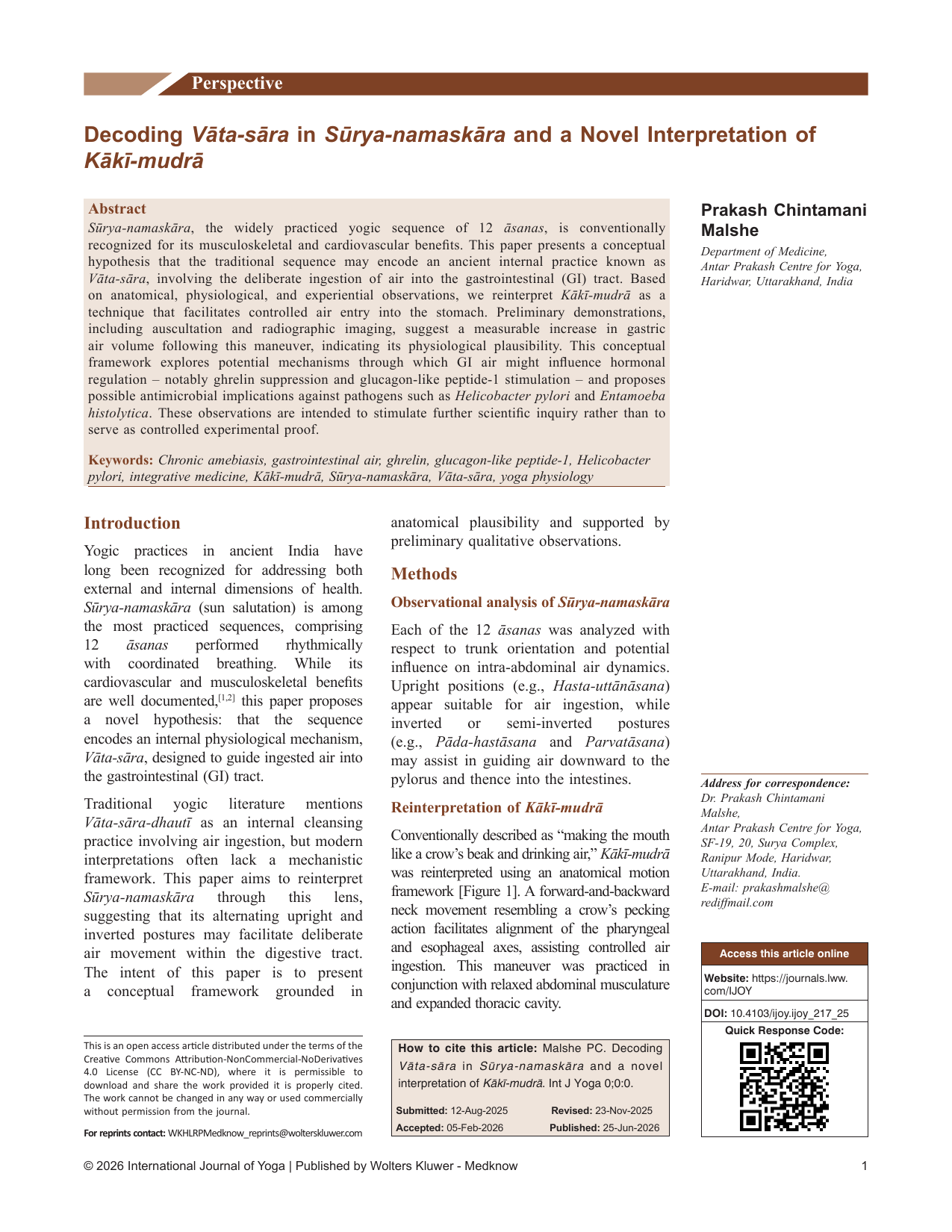
Decoding Vāta-sāra in Sūrya-namaskāra and a Novel Interpretation of Kākī-mudrā
Author: Prakash Chintamani Malshe
Journal: International Journal of Yoga, 2026
Proposes that the twelve postures of Sūrya-namaskāra encode an internal air-movement mechanism, and reinterprets Kākī-mudrā as a controlled technique for air entry into the stomach and its onward passage to the intestines, with implications for ghrelin and GLP-1 regulation.
Download PDF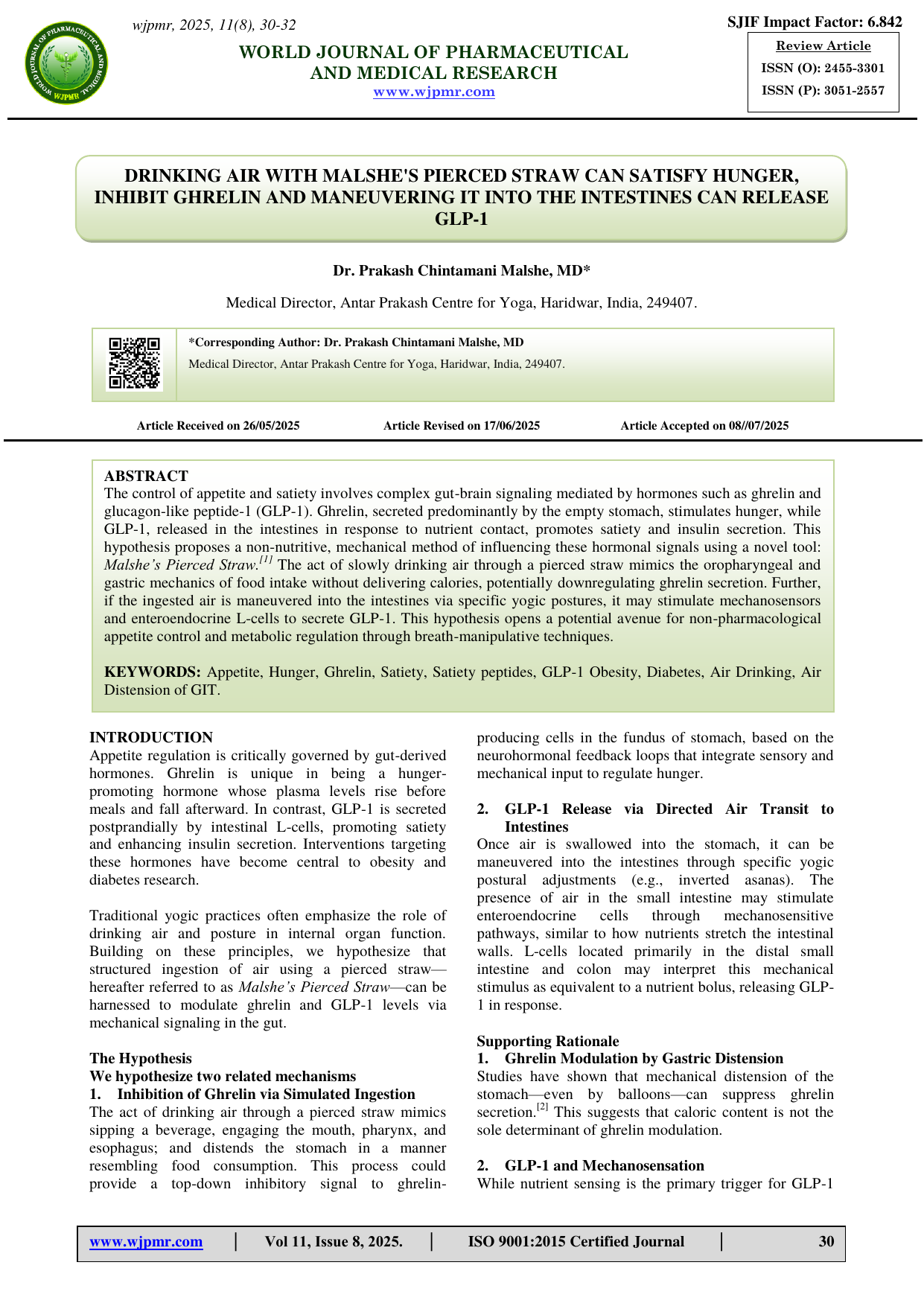
Drinking Air with Malshe's Pierced Straw Can Satisfy Hunger, Inhibit Ghrelin and Maneuvering It into the Intestines Can Release GLP-1
Author: Dr. Prakash Chintamani Malshe, MD
Journal: World Journal of Pharmaceutical and Medical Research, 2025
Hypothesizes that structured air ingestion via a pierced straw can mimic the mechanics of eating, suppressing ghrelin through gastric distension, and that directing swallowed air into the intestines via yogic postures may stimulate GLP-1 release.
Download PDF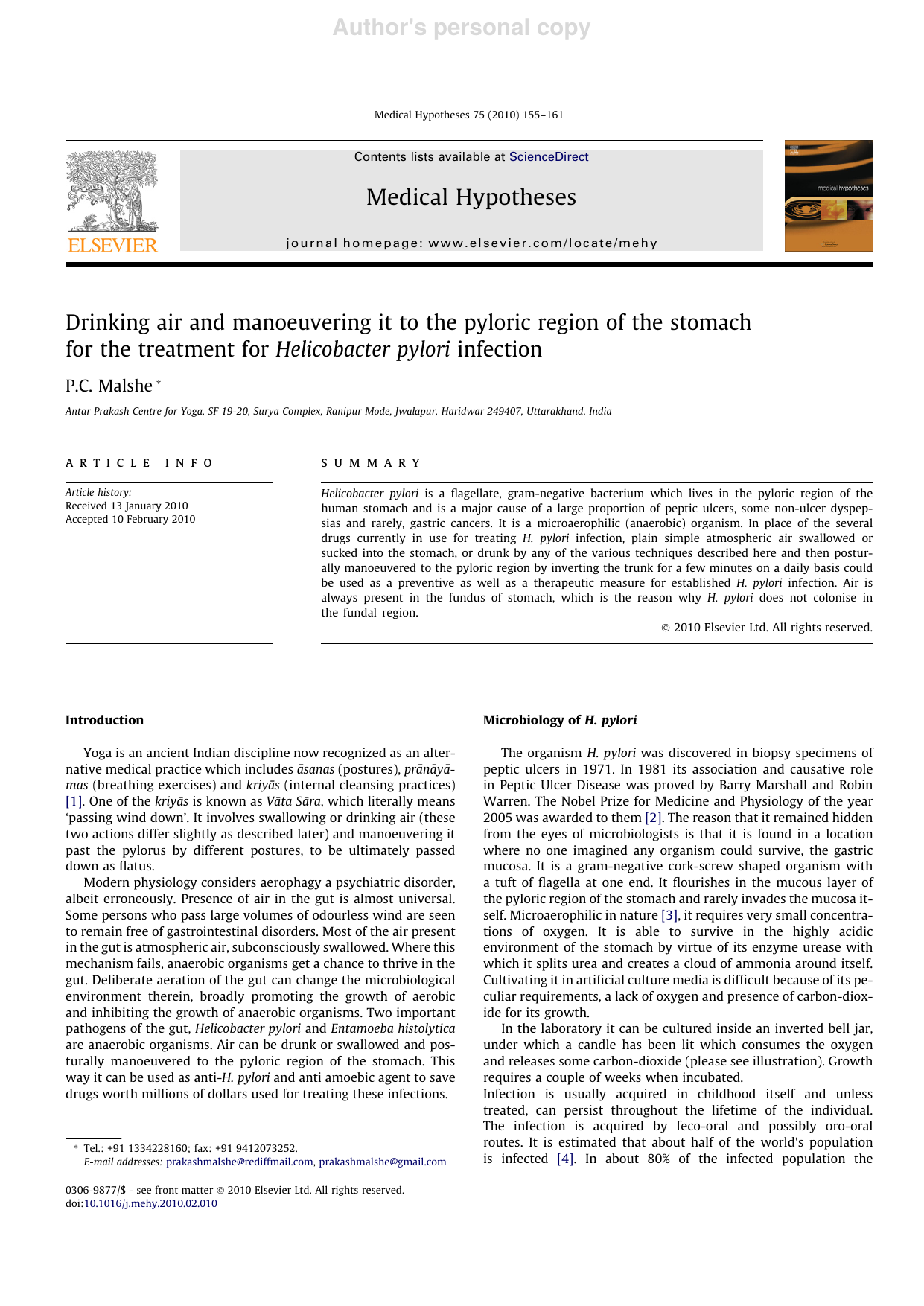
Drinking Air and Manoeuvering It to the Pyloric Region of the Stomach for the Treatment for Helicobacter pylori Infection
Author: P. C. Malshe
Journal: Medical Hypotheses, 2010
Proposes that deliberately swallowed air, manoeuvred to the pyloric region through inverted yogic postures, could inhibit the microaerophilic organism H. pylori as an inexpensive alternative to standard eradication therapy.
Download PDF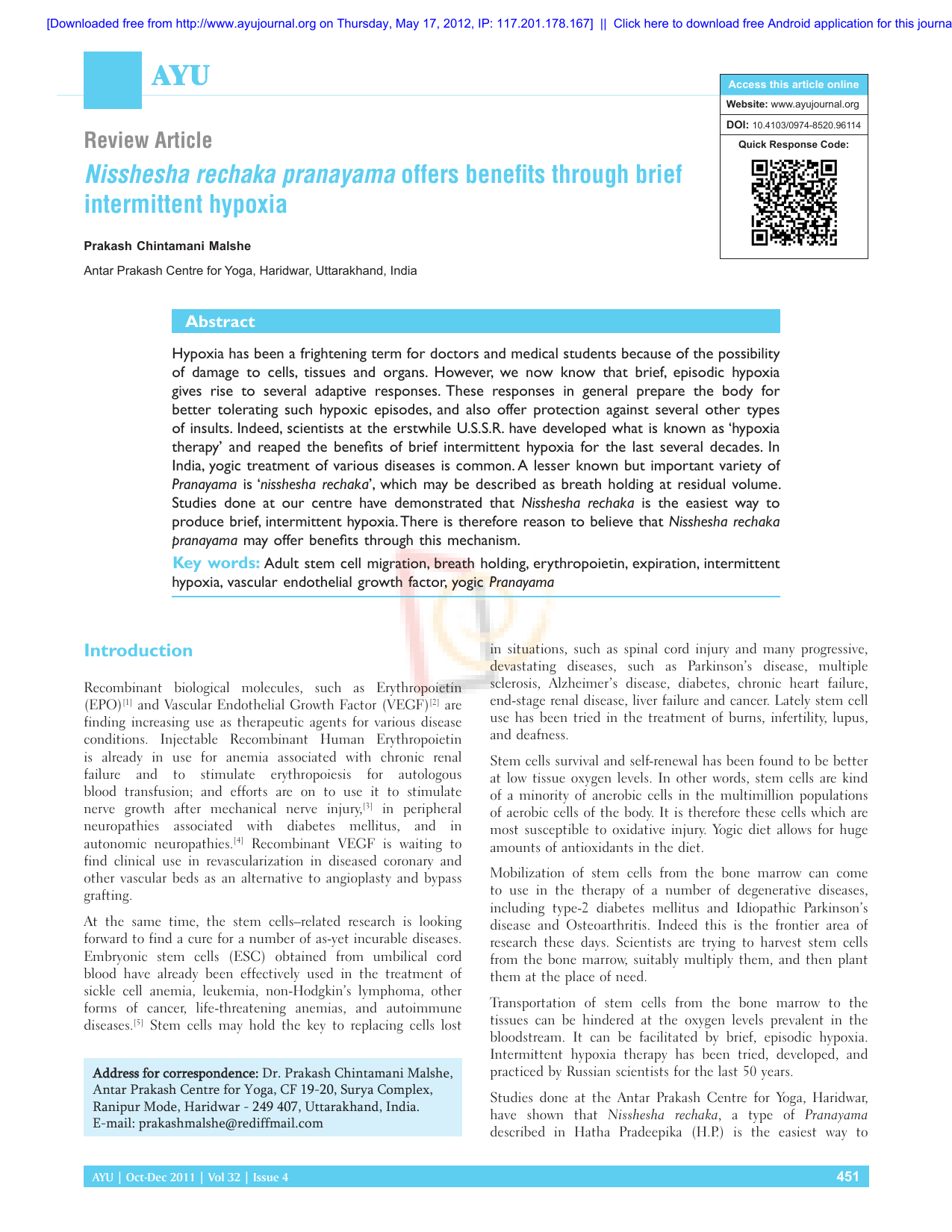
Nisshesha Rechaka Pranayama Offers Benefits Through Brief Intermittent Hypoxia
Author: Prakash Chintamani Malshe
Journal: AYU, Vol 32, Issue 4, 2011
Reviews the science of brief intermittent hypoxia, used by Russian researchers to raise EPO, VEGF, and nitric oxide synthase levels, and presents pulse-oximetry data showing that Nisshesha Rechaka (breath-holding at residual volume) is an easily self-administered way to achieve it.
Download PDF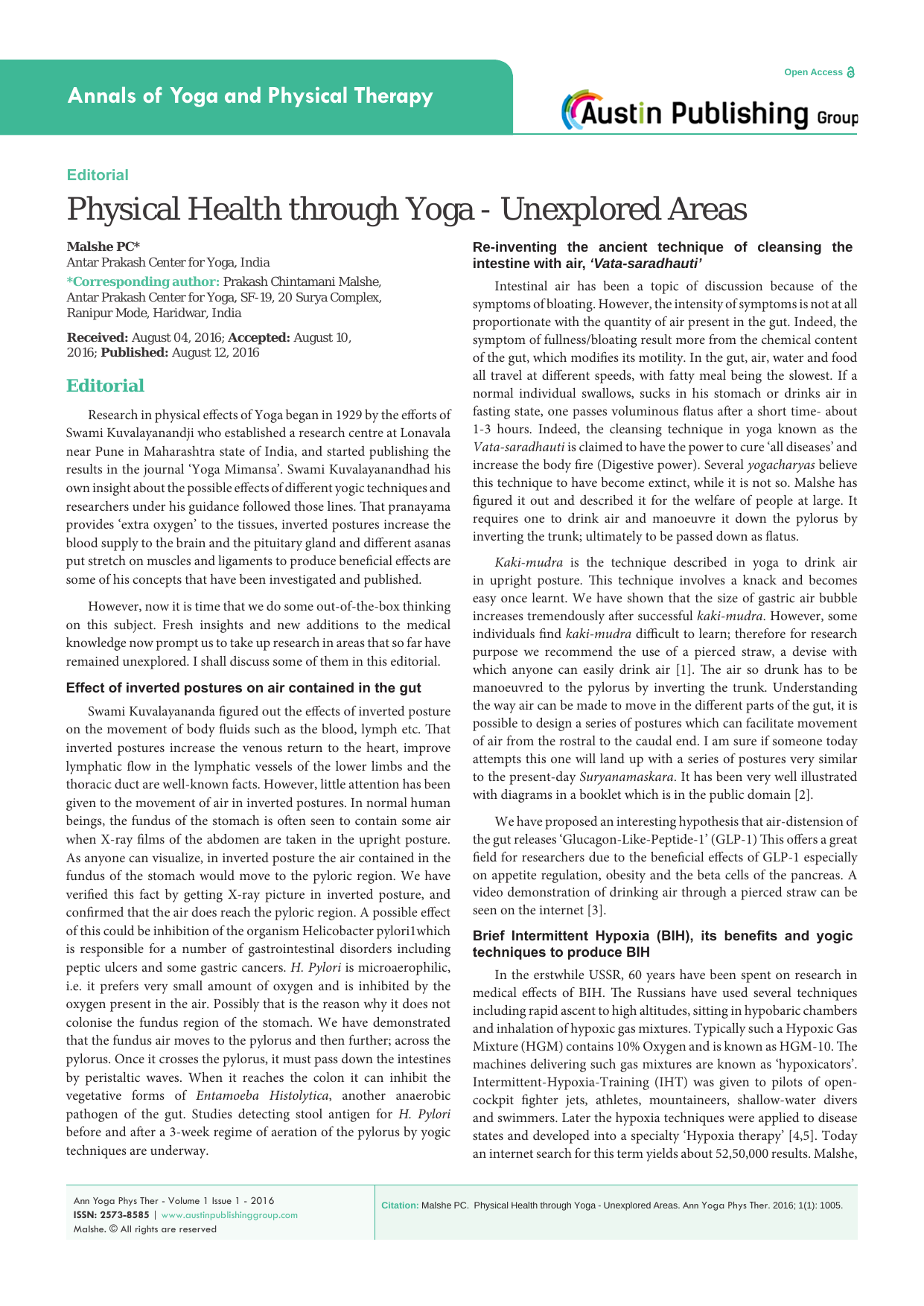
Physical Health through Yoga – Unexplored Areas
Author: Malshe PC
Journal: Annals of Yoga and Physical Therapy, 2016
An editorial surveying several unexplored research directions in yoga physiology: air movement in inverted postures, brief intermittent hypoxia, negative intrathoracic pressure during Nauli, nitric-oxide effects of Nadi-shodhana, and thermogenesis via Suryabhedana pranayama.
Download PDF